In every manufacturing workshop at INNOVAW—whether it’s the high-pressure die-casting plant, the gravity casting workshop, the CNC machining shop, or the packaging assembly line—you’ll find “work instructions” prominently displayed.
Raw material inspections must first be conducted in accordance with work instructions; there are work instructions for drawing control; the die-casting workshop has work instructions; CNC machining has work instructions; and every product package has its own set of work instructions.
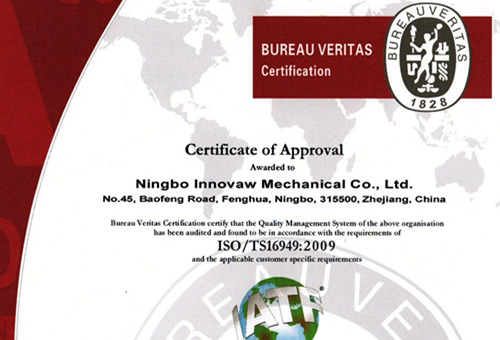
In modern manufacturing systems, quality is not merely a product attribute but also the result of the system’s operation. Within quality management systems such as IATF 16949, “work instructions” serve as the most fundamental and concrete operational documents, playing a crucial role in bridging quality standards and on-site execution.
I. The Foundational Role of Work Instructions in the IATF 16949 System
The IATF 16949 quality system emphasizes the “process approach” and “risk-based thinking,” requiring companies to identify, control, and continuously improve all processes that affect product quality. Within this framework, work instructions are the direct manifestation of process control. Every task in the work instructions has a standard to follow, and every action has a basis to rely on, ensuring that system requirements are truly implemented.
II. Standardized Execution: The Core Tool for Achieving Consistency
The key to quality control in manufacturing lies in “stability” and “consistency.” Achieving consistency is inseparable from standardization. By clearly defining operational steps, process parameters, inspection methods, and precautions, work instructions transform operations that were previously reliant on experience into reproducible standard procedures. This standardization not only reduces fluctuations caused by operator variability but also enables new employees to quickly master job requirements, shortening training cycles. At the same time, it ensures a high degree of product quality consistency even under conditions of multi-batch and multi-shift production.
III. Risk Prevention: Controlling Quality Variations at the Source
The IATF 16949 system emphasizes “prevention over inspection,” meaning that problems are avoided through upfront planning and process control. Work instructions serve as a vital vehicle for this philosophy.
When developing work instructions, we utilize tools such as Process Failure Mode and Effects Analysis (PFMEA) to identify critical control points and potential risks, and incorporate corresponding control measures into the instructions. Each work instruction serves not only as an operational guide but also as a concrete manifestation of a risk control plan.
IV. Traceability and Audit Basis
Traceability is a critical requirement in the operation of a quality management system. When quality issues arise, companies must be able to quickly trace the source of the problem and implement effective corrective and preventive actions.
As standard documents for on-site execution, work instructions provide a crucial basis for this process. On one hand, they clearly define “how operations should be performed,” establishing a standard for determining whether issues stem from operational deviations; on the other hand, through version control and change logs, they enable the tracing of process conditions at different stages.
V. A Vehicle for Continuous Improvement
IATF 16949 emphasizes continuous improvement, and work instructions serve as a vital vehicle for implementing these improvements. Whether through customer feedback, findings from internal audits, or the results of process optimization, updates to standards are ultimately achieved by revising work instructions. By continuously optimizing work instructions, companies can consistently enhance process capabilities and achieve steady improvements in quality levels.
VI. Embodiment of Corporate Quality Culture
Work instructions are not merely technical documents; they are a reflection of the company’s quality culture. They demonstrate the company’s attention to detail, strict adherence to standards, and a sense of responsibility toward its commitments to customers.
A mature organization not only possesses a comprehensive system of work instructions but, more importantly, ensures that all employees respect and follow them. Only when “working according to instructions” becomes a habit can quality control be truly integrated into daily production.
VII. Conclusion
Within the IATF 16949 quality system, work instructions occupy a pivotal position that bridges the gap between higher-level standards and on-site operations. They not only incorporate system standards and management requirements but also directly guide field operations, serving as a core tool for achieving process control and quality stability.
By establishing a comprehensive, rigorous, and continuously optimized work instruction system, INNOVAW Mechanical is able to transform complex quality management requirements into simple, clear, and actionable operational guidelines, thereby achieving full process control and continuous improvement.
It is precisely this commitment to standardization and execution that enables INNOVAW to consistently deliver high-quality products in the face of intense market competition and earn the long-term trust of its customers.

.png)


.png)
.png)
.png)

.png)


.png)

.png)

 +86-574-83008051
 sales@innovaw.com
.png)




.png)