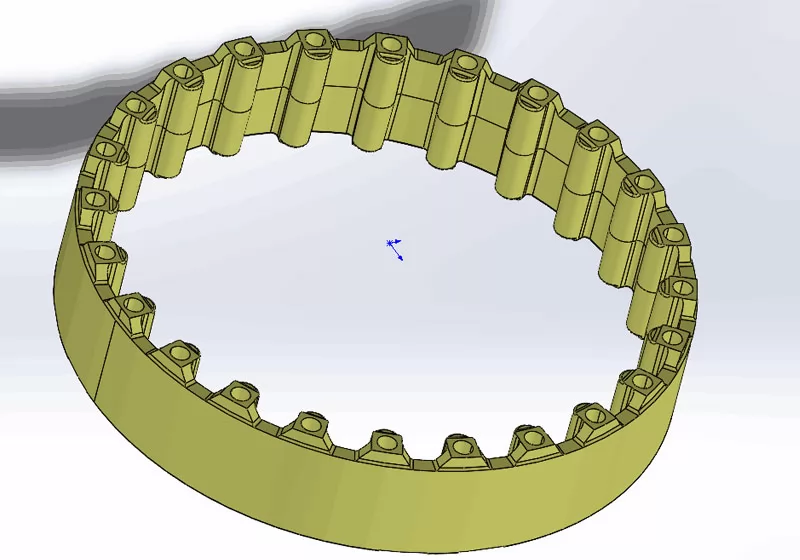
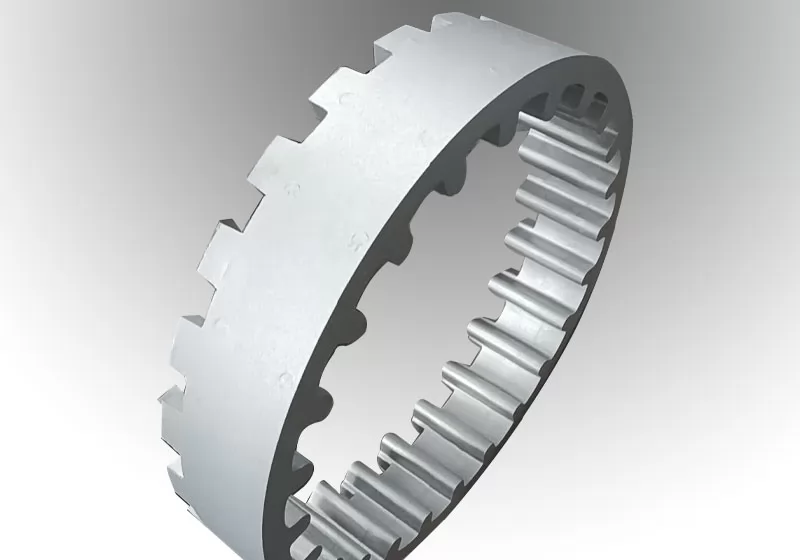
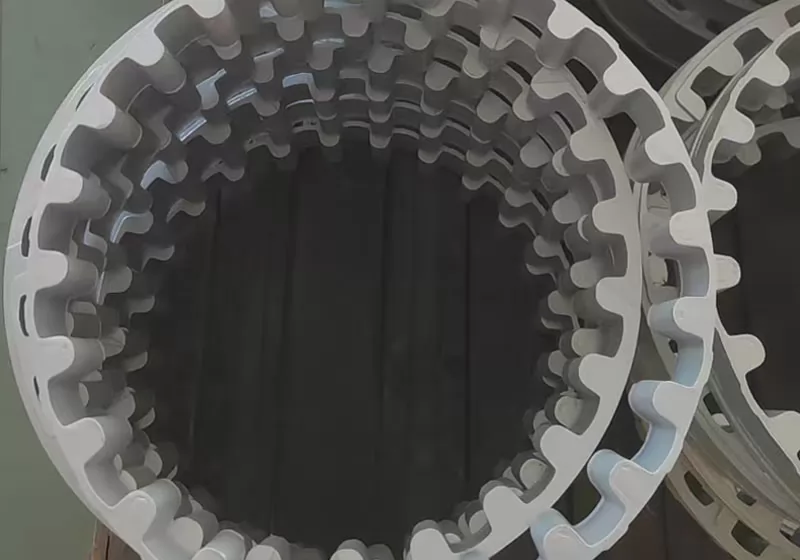
In powertrain systems, transmission coupling flanges serve as critical components connecting the power output to the drive shaft; their performance directly impacts the stability, transmission efficiency, and service life of the entire vehicle or equipment. With growing demands for lightweight design and high performance, aluminum alloy flanges have gradually emerged as a key development trend in the market.
Currently, the market offers transmission coupling flanges in a wide range of specifications. Based on connection methods, they are categorized into bolted flanges, splined flanges, and spline-type flanges. In terms of size ranges, there are flanges suitable for small equipment (φ80–φ150 mm), construction machinery (φ150–φ350 mm), and heavy-duty equipment (φ350 mm and above).
In terms of structural trends, the mainstream directions for transmission coupling flanges include lightweight design, integrated design, high-precision positioning, and high-speed balancing design.
For a transmission coupling flange, quality is a core requirement, particularly regarding geometric accuracy, surface quality, mechanical properties, and reliability. Based on operating condition classifications, the common specifications are as follows:
1. Geometric Accuracy Requirements
Roundness: 0.1–0.3 mm (large dimensions or low-speed applications), 0.05–0.15 mm (medium dimensions or medium-speed applications), ≤0.01–0.05 mm (small dimensions or high-speed applications)
End-face runout: ≤0.05–0.10 mm (standard operating conditions), ≤0.03–0.05 mm (medium- to high-speed transmission systems)
Bore accuracy: IT7–IT9 (critical locating bores), IT9–IT11 (general connection bores)
2. Surface Quality
Sealing surface roughness: Ra 1.6–3.2 μm
Non-mating surfaces: Ra 3.2–6.3 μm
Free of defects such as porosity, shrinkage, and inclusions
3. Mechanical Property Requirements
Tensile strength: ≥200–300 MPa (depending on material)
Yield strength: ≥150 MPa
Elongation: ≥5–10%
4. Operational Reliability
Fatigue resistance (cyclic loading)
Corrosion resistance (salt spray environment)
Wear resistance (tooth surfaces or contact surfaces)
To meet the above core quality requirements, a flange manufacturing facility must optimize solutions in areas such as material selection, material control, casting processes, heat treatment, machining processes, and surface treatment.
When manufacturing transmission coupling flanges, the key principles for material selection are: high strength + good castability + low porosity + heat treatability. Commonly used aluminum alloy grades include:
ASTM: A356, A357, A319, A413
European Standards: EN AC-AlSi7Mg, EN AC-AlSi7Mg0.6, EN AC-AlSi7Mg0.3, EN AC-AlSi5Cu3
(Note: A413 is suitable for applications with high requirements for casting performance or airtightness, but relatively low load-bearing requirements;)
Different grades are used to suit different environments and requirements. Key control points for the material include flowability, porosity, shrinkage zones, and suitability for heat treatment.

For products such as transmission coupling flanges, manufacturing processes can include gravity casting, low-pressure casting, sand casting, or even high-pressure die casting. Among these, high-pressure die casting is not commonly used due to the higher risk of internal defects. Sand casting and gravity casting are suitable for small batches or certain special cases. Low-pressure casting is the most appropriate method, as its advantages—including dense structure, low porosity, and excellent mechanical properties—effectively meet the quality requirements for this type of flange.
During the development process, mold design is critical. It is essential to design gates and risers appropriately, with a focus on minimizing turbulence and entrapped air, as well as controlling the solidification sequence. Additionally, smelting and pouring control are crucial steps. Refining and degassing to prevent oxidation and inclusions—particularly the control of pouring temperature and speed—directly impact the quality of the green casting.
In the later stages, heat treatment control is also a critical factor; for example, standard T6 heat treatment directly affects mechanical properties while also preventing product deformation. When producing large-volume orders, we typically conduct random tensile tests on test bars from the same furnace batch and perform spot hardness inspections on finished products to ensure the heat treatment process has not failed. Such products generally have high precision requirements, particularly regarding core specifications such as dimensional accuracy and concentricity, which pose significant challenges to a manufacturer’s CNC machining capabilities, workforce quality, and process control.
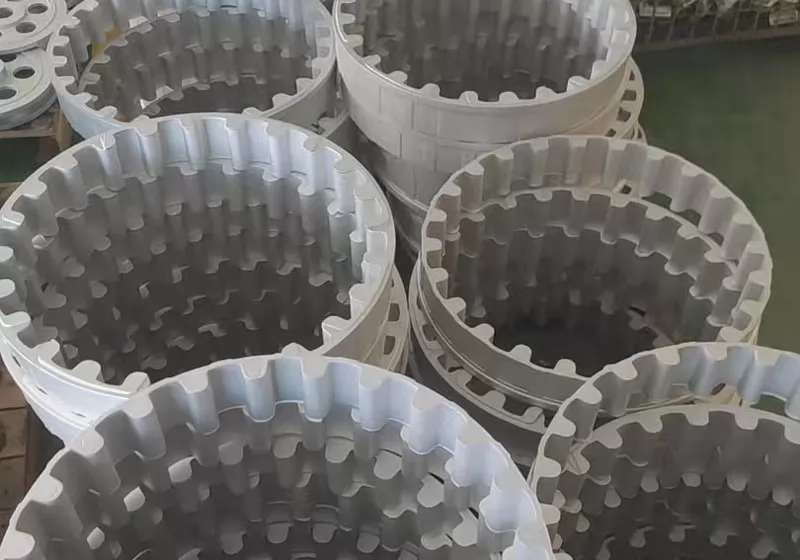
With over 20 years of professional experience in the development and production of cast products, INNOVAW possesses extensive expertise in the development of such transmission coupling flanges. We hold a core competitive advantage in our ability to achieve low-defect casting and high-precision machining. Additionally, we are equipped with a comprehensive range of inspection equipment—including CMMs and X-ray machines—and maintain end-to-end quality control capabilities, all of which are critical to ensuring the successful delivery of these products.

.png)


.png)
.png)
.png)

.png)


.png)

.png)

 +86-574-83008051
 sales@innovaw.com
.png)





.png)