For a casting manufacturer, shop-floor management is about far more than keeping the workplace clean. It directly affects production efficiency, equipment conditions, product quality, and the stability of the entire manufacturing process.
At INNOVAW, 6S inspections are carried out every working day as part of our routine management system.
Every day, Mr. Luo, our 6S inspection lead, walks through the production areas, starting from the casting workshop and continuing through the mold workshop, CNC machining workshop, warehouse, and other key areas.
The inspections are not simply a quick visual check. They follow our 6S requirements and focus on materials, equipment, tooling, workplace organization, safety aisles, identification, cleanliness, and overall shop-floor discipline.
Starting from the Casting Workshop
The casting workshop is one of the key areas of our daily 6S management.
Aluminum alloy raw materials, casting equipment, molds, containers, work-in-process parts, and finished products must all be stored and managed according to designated locations and standards.
During his daily inspection, Mr. Luo pays particular attention to:
* Whether aluminum alloy materials are properly classified and stored;
* Whether molds and tooling are placed in designated areas;
* Whether containers and material boxes are neatly arranged;
* Whether production and safety aisles remain clear;
* Whether aluminum chips, oil, or other debris are present around equipment;
* Whether finished, inspected, pending-inspection, and nonconforming products are clearly separated;
* Whether shop-floor signs and identification labels are clear and complete.
Aluminum chips, waste material, oil residue, and other by-products generated during casting are also included in the daily 6S inspection.
A clean workshop is not the ultimate goal. The real goal is to keep the production environment organized, standardized, and under control.**
Mold Workshop: Standardizing Tooling Management
In the mold workshop, the focus is slightly different.
Molds, mold components, maintenance tools, and related materials all need to be stored according to defined requirements.
Mr. Luo checks whether molds are placed in their designated locations, whether their status is clearly identified, and whether molds under maintenance are properly separated from those ready for production.
This standardized approach helps prevent problems such as misplaced molds, missing tools, or unclear mold status, while improving overall shop-floor efficiency.
CNC Workshop: Managing Every Detail Around the Equipment
In the CNC machining workshop, machines, cutting tools, measuring instruments, fixtures, and machined parts are key areas of the 6S inspection.
Cutting tools and measuring equipment must be stored in designated locations. Machining areas must be kept clean, while parts and containers must be properly organized.
Metal chips and oil around CNC equipment also need to be cleaned regularly.
These may seem like small details, but they are closely related to production efficiency, equipment management, workplace safety, and product quality.
Warehouse: Clear, Accurate, and Traceable Material Management
In the warehouse, 6S management goes beyond cleanliness. It also focuses on standardized material control.
Raw materials, semi-finished products, finished products, and nonconforming materials must be properly classified, separated, and clearly identified.
Organized storage, clear aisles, and accurate labeling not only improve warehouse efficiency but also help reduce the risk of material mix-ups and incorrect material-status identification.
Identify Problems, Report Them Immediately, and Follow Through
During the daily 6S inspection, any nonconformity found by Mr. Luo is recorded and reported promptly.
**Finding a problem is not the end of the process. It is the beginning of corrective action.**
For every identified issue, the responsible area is notified, corrective requirements are defined, and the required actions are assigned.
Mr. Luo then follows up on the progress of each corrective action.
Once the correction is completed, the result is verified on site, and the completion status is also communicated.
This creates a closed-loop management process:
Daily Inspection → Problem Identification → Immediate Reporting → Corrective Action → Progress Follow-up → On-site Verification → Result Reporting**
6S: A Practical Part of Our Systematic Management
Daily 6S inspections may appear to focus on workplace organization and cleanliness, but they reflect something much more important: our commitment to standards, responsibility, execution, and continuous improvement.
For a casting manufacturer, systematic management should not exist only in quality-system documents. It should also be visible in every detail of the shop floor—from aluminum alloy materials and molds to equipment, tooling, work-in-process parts, and finished products.
From the casting workshop to the mold workshop, from CNC machining to warehouse management, we focus on turning every identified issue into an opportunity for improvement.
We believe that systematic management must be implemented every day, standards must be applied at the workplace, and responsibilities must be clearly assigned to every relevant position.
Improve a little every day. Make the workplace better every day.
For INNOVAW, 6S is more than workplace organization. It is an important part of our ongoing effort to strengthen shop-floor management, improve process control, and support lean manufacturing.
Make standards a habit. Keep the workplace under control. Make continuous improvement part of everyday work.
That is the meaning behind INNOVAW’s commitment to daily 6S management.
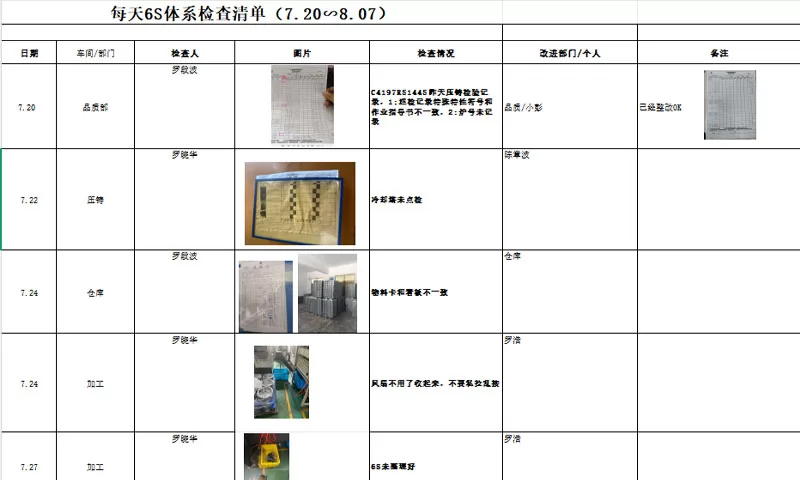
6S Daily Inspection Checklist
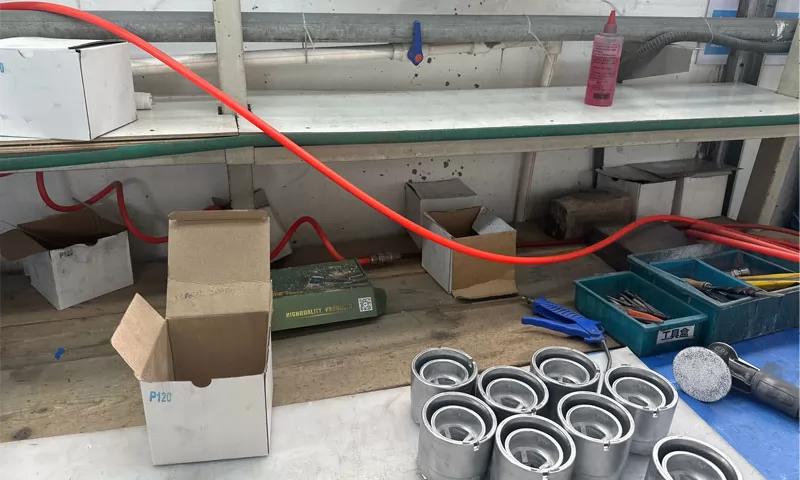
The cardboard boxes were not organized in a timely manner.
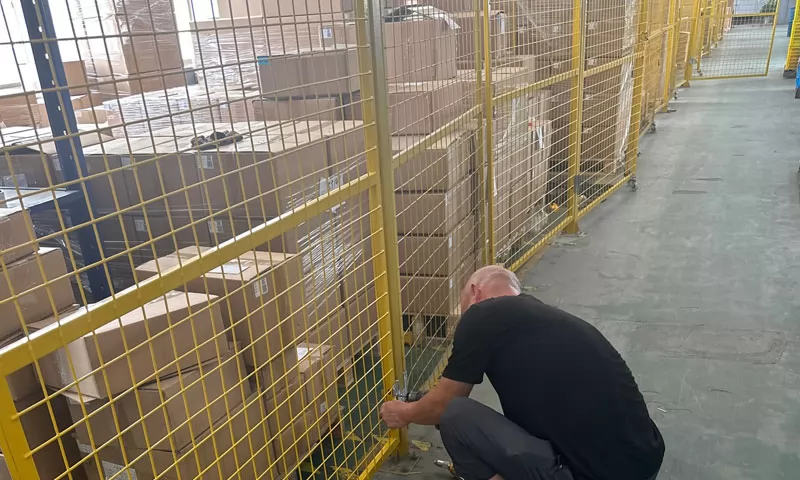
The finished products were not stacked neatly.

.png)


.png)
.png)
.png)

.png)


.png)

.png)

 +86-574-83008051
 sales@innovaw.com
.png)




.png)